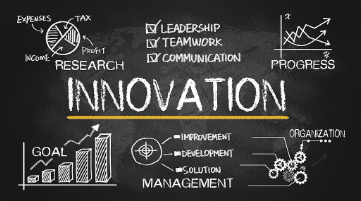
10 Things you should doo to nurture innovation in students

There is more to creativity than paintbrushes and pencils. It is a process and way of thinking that is equally crucial for individuals who imagine a future and those who appreciate the arts. Beginning at an early age, students learn how to access sources of creativity and use this vital talent, making the school the ideal place for nurturing creativity.

Typically, individuals feel that creativity is innate and cannot be taught. Nonetheless, with the proper support and atmosphere, we can assist children in developing their creative abilities and expressing their imaginations. There are numerous forms of creativity, including drawing and painting, writing and reading, dance and acting, as well as arts and crafts and imaginative play. Children with superior creative thinking skills not only do better in school but also have superior executive functioning skills. Therefore, we must do everything possible to foster our children’s creativity and imagination.

When a teacher incorporates creativity development into the school day, kids can have greater long-term success in numerous fields. They can develop greater comfort and proficiency with self-expression, ideation, and execution.

Creative helps in various ways-

  • solving problems.
  • Thinking critically.
  • Retaining information.
  • Exhibiting deeper comprehension.
  • Making connections across subjects.
  • Taking standardized tests.

10 things that help in encouraging creativity-

  • Prepare a library in the classroom- Give your kids easy access to a wide variety of engaging books at their reading level to inspire a love of reading. Make learning in your classroom more engaging by inviting students to work together on a creative project, such as making reading lists for students with varying interests or sorting and looking for new books.
  • Visualize ideas and goals- Permit your students to define their objectives and organize their ideas in their unique ways. Teach students how to utilize various graphic organizers, such as mind maps, Venn diagrams, visual timelines, and other tools.
  • Create opportunities for reflection- Reflective activities aid students in assimilating material more thoroughly, so boosting their creative and contextual comprehension of new topics. Display reflective learning tools that students can concentrate on in your classroom
  • Display inspirational quotes- Posters of motivational quotations in a school environment can facilitate engaging conversations and critical thinking. Encourage your class to explore and discuss the significance and applicability of each message. Some quotations urge kids to express their originality.
  • Enliven your virtual classroom- Remote learning isn’t just screen time. To maintain creativity in distance learning, provide hands-on creative activities. Use a virtual scavenger hunt or found things to get your students moving.
  • Take your teaching outside- When the weather is favourable, have an outside classroom. Select outdoor, adventurous activities. Also, consider a veggie garden. This transforms learning.
  • Introduce multimedia learning materials- Use more than just textbooks and worksheets. TED Talks and podcasts may bring inspiring brains into a high school classroom.
  • Support hands-on learning-Hands-on learning allows kids to express new concepts, think critically, and share their opinions, engaging them deeper. Let pupils experience it first, then introduce the theory.
  • Encourage outside-the-box assignment formats- Let your students choose the format they want to follow for an assignment. Instead of the typical book report essay, maybe they’d rather share their ideas through a photo essay, skit, diorama, or recipe.
Has India Been Successful In Creating Learning Opportunities In Rural Areas With The Use Of Ed-Tech?

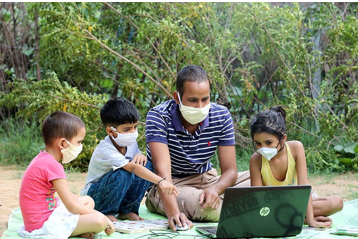
The last two years have been immensely successful for ed-tech platforms with much of the world switching to online education. And nowhere else has ed-tech seen growth as significant as in India, with much potential in rural areas. The Indian government did well to set up internet connections in many rural areas to support education even during the lockdown. In rural locations, the actual use of e-learning has had a genuine advanced learning influence on their educational system.

Historically, India has had a lousy track record in terms of school enrolment and literacy rates in rural areas. Many people in remote areas don’t have the money to send their kids to school. In such families, the parents usually make their kids work instead of sending them to schools to get an education. Or in other cases, only boys are allowed to get an education who may or may not take it seriously.

The advent of online education and ed-tech has turned things around education has become much more affordable and accessible. According to industry sources, schooling from grades 1 to 12 has expanded almost 6.3 times from 2019 to 2022. The government has played a huge role in this growth by supporting the initiatives of ed-tech companies to make education accessible to everyone, everywhere.  Government initiatives like Swayam, Diksha and its e-pathshala initiative have encouraged schools in remote areas to use online teaching methods to ensure that academic learning continues regardless of the environment.

The Kerala government runs Victers, an educational TV station. The channel educated more than 50 lakh children in more than 15,000 schools during the lockdown. They posted these videos on YouTube garnering over 17 crore subscribers.

Rural India happens to comprise a majority of the Indian population and there aren’t enough schools in rural areas to accommodate the growing student population. Moreover, the infrastructure in our schools is poor, and the gap between the rural and urban areas is wide. The vast majority of the problems that Indian rural schools experience may be resolved by using edtech. The Indian government has recognized the significance of these platforms and budgeted $8.56 billion for the Department of School Education, which will be used to install cutting-edge technology in public schools.

Recent research suggests that the EdTech sector is expected to grow by $30 billion over the next ten years as a result of rising user numbers. This growth will be attributed to more and more rural children gaining access to quality education owing to ed-tech services.

A standardized curriculum can be created and executed in public schools by collaborating with EdTech platforms. EdTech can enhance the traditional educational methodology used in schools. Children who may not otherwise have access to numerous businesses and services in cities may gain fresh experiences from it.

EdTech platforms are steadily gaining ground in rural India and opening up new possibilities. The necessity for a traditional classroom has become obsolete as a result of EdTech learning. Students may now study at their leisure and in the comfort of their homes while still providing for their families throughout the day.

Critical Thinking – Is Always Important

“The essence of the independent mind lies not in what it thinks, but in how it thinks.”

              – Christopher Hitchens

Do you know what significantly impacts any action you take or don’t take?

Thinking. Critical thinking to be precise.

Even though there are numerous definitions, you may not be completely certain of what critical thinking entails. When you use critical thinking, you analyze, interpret, evaluate, and form opinions about what you read, hear, say, or write. The Greek word “Kritikos”, which means “able to judge or discern,” is where the word “critical” originates. Making trustworthy decisions based on trustworthy information is a key component of critical thinking.

Using critical thinking does not necessitate being pessimistic or fixating on flaws. It entails having the mental clarity necessary to analyze a situation or a piece of information, interpret it, and use your interpretation to reach a reasoned conclusion or judgment.

People engage in critical thinking by applying logic to decide what to think or believe in a particular circumstance. Reflective, independent, and competent workers are those who are capable of critical thought.

When you use critical thinking, you can logically connect ideas, examine and assess arguments, look for contradictions and errors in your work and the work of others, solve challenging problems, and engage in reflective practice.

Not only do critical thinkers have good information retention skills, but they also understand how to apply that information to infer facts and predict outcomes. Critical thinkers typically solve problems more effectively than people who merely memorize facts because they conceptualize the results.

The following are some advantages and significance of critical thinking:

  • It encourages you to think differently.

Critical thinking is a component of lifelong learning, both in the context of formal education and in the workplace after graduation. Critical thinking is an essential life skill. This encourages imagination, creativity, and “thinking outside the box.” It keeps you from becoming constricted. In higher education, critical thinking will be expected of you. With it, you can hone your decision-making, evaluation, and problem-solving abilities.

  • It promotes introspection.

Critical thinkers are innately able to approach problems from various angles. Critical thinkers are more capable of self-reflection and can alter their beliefs in response to fresh information because they resist the urge to defend their convictions.

  • It helps you to communicate better.

Critical thinking is the concept of self-directed, self-disciplined, self-monitoring, and self-correcting thinking. Excellence requires adherence to rigid standards of excellence as well as conscious mastery of their application. To do this, you must overcome your egocentrism and sociocentrism as well as build strong communication and problem-solving skills. Critical thinking abilities are necessary for effective communication and presentation. You can communicate your ideas better when you think logically and methodically.

  • It makes you happy.

People who use critical thinking can better understand their goals, motivations, and selves. You can alter your circumstances, foster personal development, and increase your level of general happiness when you can deduce information to identify the most crucial components and apply those to your life.

Public Speaking

“According to most studies, people’s number one fear is public speaking. Number two is death. Death is number two. Does that sound right? This means to the average person, if you go to a funeral, you’re better off in the casket than doing the eulogy.”

  • Jerry Seinfield

The majority of people struggle with their fear of public speaking. You might recall the very first presentation you made in class. Your heart rate may have accelerated or your voice may have become shaky as a result of anxiety. Everyone has this response to public speaking at some point in their lives, and it is normal.

But don’t worry; your fear of public speaking is not a permanent thing. Your public speaking abilities can be enhanced with enough effort and practice. Before getting into tips to enhance your public speaking, let’s first examine the significance of public speaking.

Both in one’s personal and professional life, public speaking is useful. Your career, business, and overall quality of life can all benefit from being a skilled public speaker. Public speaking has many advantages, including the ability to reach audiences and leave a lasting impression on them.

Having strong and passionate oral communication abilities can help you succeed in a variety of situations, including business pitches in office meetings and TedTalks. Your communication skills must be top-notch regardless of the size of your audience if you want to motivate people effectively.

Here are some useful pointers to help you master public speaking.

  • Prepare in advance

You must prepare for your speech or presentation if you want to deliver it effectively. Identifying the key messages you want to discuss is the first step. Then look for intriguing information or statistics to support your claims. Start organizing your content and make it more informative and interesting for the audience.

  • Learn how to control your emotions 

Before your emotions take over, learn to control them. Being anxious while presenting is normal. But that doesn’t imply that you let your feelings rule your actions. You can develop the confidence to speak in front of an audience. Remind yourself to remain relaxed and calm whenever you feel anxious. Continue speaking even if your voice begins to tremble because most of the time nobody else will notice! The audience can only tell if you appear anxious. Even the most confident speakers experience nervousness, but the key is to keep those feelings to yourself.

  • Acknowledge Your Nervousness

According to research, anxiety can improve performance. People who see challenges in stressful situations get energy from their anxiety and perform better. Our bodies prepare for a “fight or flight” response when we become anxious. Our mental faculties sharpen and go into hyper-alert mode. There are two options available to us: either we let the pressure affect us or we accept it and work harder. Face your fear if you want to overcome it.

  • Be Aware of Your Body Language

Body language includes your postures, facial expressions, gestures, and eye movements. The term “non-verbal communication” is used to describe it. Information is expressed and conveyed through body language. Your body language and message should be in sync. Maintaining eye contact is also crucial if you want to engage your audience more deeply. Avoid sagging your shoulders when giving an important speech; standing straight will make you feel more assured.

Life Skills For High School Students

How You Can Teach Life To High School Students? | Stoodnt

Even though the thought of becoming an adult might make you anxious, every teen has to acquire practical life skills to become a capable and self-sufficient young adult. A solid foundation in a few essential life skills may make the transition from secondary school to the real world easier by giving young people the tools and strategies for living a less stressful, more structured and fruitful life. Our educational system has a responsibility to support students outside of the classroom by equipping them with crucial life skills that will help them succeed in the future.

Some important life skills that every high schooler should know by graduation are:

  1. Money Managing- Before setting out on their own, whether it is to start their first job, enrol in college, or take a gap year, young adults should focus on developing their financial knowledge and money management abilities. Students should grasp the fundamentals of money management, including how to create a budget, why it’s crucial to pay bills on time, and why a credit card isn’t free money. They should also be aware of the pros and cons of borrowing money for things like student and vehicle loans.
  1. Organizational Skills- Another essential life skill that many students lack is the ability to stay organized. Good organizational practices may lay a solid basis for other crucial abilities such as time, work, and money management, efficient communication, and even self-care. Being organized is crucial for students since it helps them define priorities, set objectives, and manage stress. Additionally, having effective organizing abilities facilitates collaboration with others and boosts productivity and efficiency.
  1. Networking- “Networking” might be daunting or seem boring, but it’s simply relationship building with a goal since interpersonal relations are so valuable. This can aid students in the future while looking for a career or applying for scholarships, but it is also beneficial to simply have connections who can vouch for one’s abilities. The more networking experience students get, the more prepared they will be for job interviews and other important professional interactions.
  1. Managing Time- Students must learn to manage their time for short-term and long-term goals, whether it is getting ready for class, doing an assignment, or seeing friends. When students go off on their own, it is their responsibility to make sure that they adhere to the schedule. Students should be taught to prevent poor habits of wasting time and to acquire time-management skills, such as establishing daily to-do lists, using the work/break approach, or constructing calendars with designated hours for school, sleep, appointments, and recreation.
  1. Maintaining Health- Making physical and mental health a major priority is one of the more common pieces of advice for high schoolers. It may take a few days to almost a year to develop a basic habit like making the bed every morning or a serious habit like running two kilometres every day. The secret is to maintain motivation and focus on turning a routine into a habit. In addition to laying a solid basis for lifelong wellbeing, developing healthy habits teaches the value of perseverance and patience.
Topic · Childern · Change.org

Being book smart is a wonderful thing. However, lacking common sense or skills for the routine activities of personal finance, simple repairs and sewing, household managing, or interpersonal interactions seems immature, somewhat helpless, and heavily dependent. Due to these factors, high schools should undeniably teach life skills to their pupils.

If we look at the lifestyle, we all are living has become so stressful and hectic that we often fail to take care of our health, most people who work endlessly and tirelessly often try to detox to relax and regain mojo back in their lives. Detox is a period when you stop taking unhealthy or harmful foods, drinks, or substances into your body for some time, to improve your health.

A healthy and fit body is something that everyone aspires to be, and for that, we might have to eat a balanced diet and get good sleep. 

Most people often create and try out a few ways to detox but due to a tight schedule, most people cannot follow this plan. The basic idea behind detox and cleanse diets are to purify and clean the body of the “bad” stuff, Detoxifying is meant to start the season off with a clean slate and to reset your health.

There are a few benefits of detox-

  • improved energy. 
  • Weight loss. 
  • Relief from constipation. 
  • Resolved headaches, muscle aches, and fatigue

If anyone wishes to follow a new schedule with a few changes that may be different from their regular schedule.

There are many advantages why people should detox more often-

  • Increases energy levels
  • Improves mental clarity
  • Promotes healthy, clear skin
  • Balances emotions and helps improve mood

There are a few tips for effective to detox naturally detoxing your body-

  • Start your day with warm water with lemon squeezed in it, it flushes out the toxins out of the body. Lemon and ginger together improve digestion and give the metabolism a boost. Preparing this drink is an easy task and won’t take more than 2-3 minutes. Ensure that it is consumed empty stomach.
  • Keep yourself hydrated, and drink as much water as you can. approximately 8-10 glasses or 2 litres of water should be consumed at least.
  • Good sleep often helps the brain flush out the toxins of the body, which often helps the body. The quality of sleep at night is underestimated.

Here are a few tips for beginners too are thinking to detox.

Ways Of Relaxing For Teachers Who Teach Online Only

Ways of relaxing for teachers who teach online only

10 Tips for Teachers Relaxing Over the Holidays

During the past two years, teachers have gotten the opportunity to teach online owing to the global pandemic. Before the pandemic, there were many educational platforms such as Coursera, whitehat jr., by us, etc. which are entirely online based to provide tutoring and online courses to students. However, the focus on the well-being of teachers who only taught online was very little. In that regard, there is an increasingly focused on the well-being of online teachers and this article offers a few ways to relax for these teachers.

As a teacher who only teaches online, there are certainly some benefits when it comes to teaching. The most prominent factor is the convenience of staying at home and teaching remotely. More perks are associated with this like going on short vacations and working from there (workstations as a lot of people call them). Or having more control over your schedule and scheduling classes in a manner that is suitable for you, emphasising work-life balance. Lastly, and possibly the most effective way to relax for teachers is to reduce the stress from excess workload is to utilize online tools for organizing, scheduling and grading work. 

  1. Workstations: There are few things more relaxing than vacations to beautiful and undiscovered places. Go to an off-beat hill station if you like the cold or you can go to a beautiful coastal city to spend time at the beach and relax.  Hill stations like Jibhi are relatively unknown and South Goa is known as the place to be to relax and spend time alone. Taking advantage of the remote working option, you can go to these vacation spots and work from there. Hence, the name- Workstations. Just be sure to take all the amenities you might need for your job such as your electronics, a portable internet-connected device such as a wifi dongle, and anything else specific to your job. 
Uttarakhand offers workcation from mountains for those bored of working  from home
  1. Flexibility of Schedule: Another way to relax teachers who only teach online is their freedom to set their schedule. They can plan how many classes to have and when they want to have them without depending on factors such as school timetables. If they ever feel that they are in stress due to overworking or anything, they can easily cancel the class and reschedule them for a later time. Having more control over their schedule also gives them time to spend with family. Balanced work life and home life are essential to alleviate stress for teachers and help them relax.
6 Ways to Improve Teachers' Work-Life Balance - ViewSonic Library
  1. Digital Assessment Assistant Tools: As teachers, it can become tiresome to keep grading every individual paper submitted by students. A major perk of teaching online is using digital grading tools to make your work easier and help you relax later. There are tools for grading and giving comments on Quizzes, Projects, and Discussions that were created with efficiency in grading in mind. These tools aid the teachers in grading the student’s work based on previous responses, significantly lowering the teachers’ labour.  Many systems provide two-way comments, allowing students to reply to your remarks.
25 Time-Saving Grading Apps To Make Teachers' Lives Easier

How ready are we for PHD right after Four years UG program

Students can now pursue Ph.D after 4-year undergraduate course

Normally, a student’s educational progression goes from schooling to a bachelor’s then a master and from there to a doctorate. However, recently, universities are allowing students to directly enrol into PhD or research programs right after their under-graduation. This is rather a bold and optimistic decision, but whether it will be successful remains to be seen. 

The University Grants Commission (UGC) has recently issued new norms and qualifying requirements for PhD applicants. These PhD admission standards are planned to be adopted in the 2022-2023 academic year. According to the new criteria, students with a minimum CGPA of 7.5 out of 10 in their four-year undergraduate course will be eligible for PhD enrollment without having to finish a master’s degree.

India has been following the system of three-year undergraduate programs but only recently, there was a shift in the Indian education policy where the students were given the choice of opting for a three-year bachelor’s degree or a 4-year degree. This policy works well with the idea of doing PhD right after 4 years in the UG program.

Can you do a PhD without a master's degree? – Uni of Qld

This decision could also be in response to the increasing brain drain India faces due to limited higher education opportunities. This gives the students who are determined to get into research right away without wasting time and money on a master’s degree which may not be as useful to them. 

This system of jumping from four-year UG to PhD directly is a new idea that even though sounds interesting, may not be easy to implement as the universities and students may not be ready for it. A Master’s degree is not necessary for entrance to most PhD programs in the United States. In Canada, intellectually bright individuals can begin a Master’s degree and subsequently “fast track” or transfer to a PhD program without finishing the Master’s degree requirements. Here are the advantages of this approach.

  1. Time commitment- Many PhD courses do not provide coursework reductions to candidates who already hold a Master’s degree. This implies students will have to complete a five to seven-year PhD in addition to their one to three-year Master’s degree. In such cases, starting a PhD straight out of undergrad is the better option.
  2. Funding- The majority of PhD programs provide students with half or full financing for their studies, and many even provide them with a stipend in addition to a tuition waiver. PhD students also have a wider number of external financing options, such as national scholarships and significant fellowships that favour PhD work over Master’s studies.
  3. Start working right away- Students who have a firm idea of their research interests and already have identified possible supervisors may opt not to postpone their PhD study by first completing a Master’s degree.
  4. Long-Term Projects- Because of the reduced time restrictions of a Master’s degree, students find it challenging to set up and manage long-term projects. PhD students are more capable to dig deeper and completing multi-year experiments, and extensive investigations.
  5. Will still earn a Master’s- Direct entry PhD students are typically granted a Master’s degree along the way for course work done throughout their doctorate.

Finally, the option of whether to pursue a Master’s degree first or apply directly for a PhD is a subjective one that you must determine on your own. Consider the advantages and disadvantages, as well as your objectives and priorities.

Demand For Civil Service Examinations

Are you someone who is studying for civil services? If yes, then you may have as well been plagued by the following questions.

What motivates you to study for the test? 

Why are you suffering in those untidy rooms, away from your family, and not eating homemade food, while your friends are living it up, going to Goa, working top-notch jobs at MNCs, and earning six-figure salaries? 

And amid all of this, why are you here?

The motivation of the civil service aspirant for taking the action to prepare for the UPSC Civil Services provides the answer. Without a goal, all the efforts he or she is making right now are useless. Maybe you wish to lead or make a difference. Maybe you wish to earn your respect and along with it, a place in society. But no matter what your purpose is, the fact remains that there are limited seats and many more civil servant aspirants. 

In 2022, there will likely be 712 open positions that must be filled through the civil services examination, 22 of which are designated for people who fall under the benchmark disability category. However, the precise number of openings might change. For any positions that may be determined by the government, preference will be given to applicants from the scheduled castes, scheduled tribes, other backward classes, economically weaker sections, and persons with benchmark disabilities.

It is given in three stages: the General Studies Paper I and General Studies Paper II, also known as the Civil Service Aptitude Test or CSAT, which make up the preliminary examination; and the main examination, which consists of nine conventional (essay)-style papers, of which two are qualifying and only marks of seven are taken into account. A personality test follows the primary examination (interview).

The Central Government hires and trains candidates who are chosen for various positions, and then assigns them to various State Cadres based on preference and ranking.

All applicants must carefully read the Notice of Examination as well as the Government’s (Department of Personnel and Training) notification of the Rules of Civil Services Examination. The candidates applying for the exam should make sure they meet all requirements for admission to the exam. If they meet the requirements for eligibility, they will be admitted to all stages of the exam on a pure provisional basis. The Commission may not have officially cleared a candidate’s candidacy simply by issuing an e-Admit Card to them. Once a candidate has been selected for an interview or personality test, the Commission begins to verify the candidate’s eligibility requirements using original documents.

According to the Civil Services Age Limit criteria, the candidate must be at least 21 years old (for the UPSC CSE 2020) and at most 32 years old (i.e., born between the dates of August 2, 1988, and August 1, 1999) as of August 1, 2020.

The position of a civil servant calls for a great deal of reverence and responsibility. An officer must be physically and mentally fit and healthy to resist giving in under the constant work pressure. And so, only the best of the best are selected.

What’s Ahead For CUET

As India is heading towards development in every sector, be it any sector we can see significant changes, if we talk about the education sector. The education ministry has introduced CUET common university entrance test.  This has now been announced as the only method of getting admission to universities that are conducting admissions through CUET. CUET is being undertaken by the National Testing Agency (NTA).  This is one test for all universities’ admission.

Until 2022 every university had its method and syllabus for entrance exams for different universities. Every university had its mechanism for selecting students for admission.

To maintain equality in admission the education ministry introduced CUET.

CUET has its importance for various reasons-

  • Equal opportunity for all – Every student aspires to be in their dream and due to many differences in education board the students are differently weighed in the marks allotted to any particular student, this CUET helps in setting one exam for all. Does not hold any value of previously marks scored in 12th except a few courses. 
  • Stop biasedness of any particular subject – This is one of the primary reasons that the education ministry had to introduce CUET. for example, if someone needs to pursue any particular course in this previous traditional method of admission it used to be like you need to score good marks in all subjects of your respective stream but this method had improved that you need to better good in that particular subject of your stream.
  • Clarity of ranks- Earlier there used to be confusion that ranks of students were shown so that the students can select their preferred college according to their ranks in the exams. This has to lead to students having a better idea of what they need to choose in their preference list.
  • End the high cutoffs race – Earlier every student used to face the heat of high cutoffs in colleges and students missing out on their favourite colleges, now here the students need to prove themselves by scoring marks on the common entrance test.

Some universities fear that with the coming of the common entrance exam the weightage and importance of the 12th standard will perish. However, that’s probably not the case. The NTA has kept the syllabus for CUET completely based on the class 12th syllabus. In this way, both the studies of the 12th standard and the equality in the entrance process will be balanced.

This is the beginning of a change for the betterment of students. This would rather help them to have a clear idea and be more focused.

Design a site like this with WordPress.com
Get started